
When you react
Going back after you lose it
What's going on after you lose it, what helps, and one thing to try this week.
16 min read
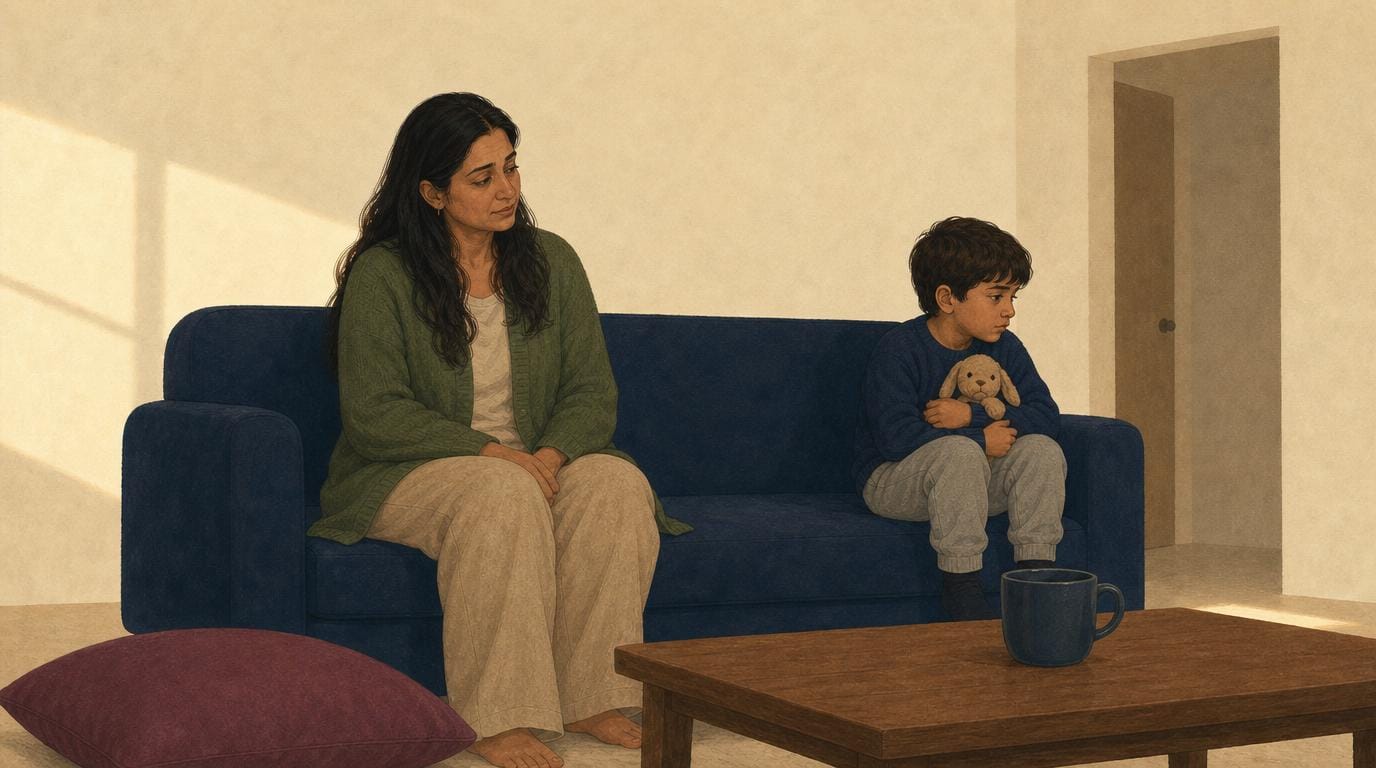
THE SHORT VERSION, FIRST
Three things are true after you've lost it:
- The thing that puts it right isn't never snapping again. It's going back to them afterwards. No parent gets the "never snapping" version. The going-back is the part you actually get to do.
- Going back doesn't undo the moment, and it isn't grovelling. It's short and honest: I remember what happened, that one was mine, we're okay.
- The same empty tank that made you lose it is what makes going back feel impossible tonight. That's not proof you can't. It's a reason to keep it small — and to let it be later if later is all you've got.
That's the shape of it. Here's what's underneath — including how your child learns to put things right by watching you do it.
The snap itself — the split-second story your brain told you about what your child was doing — is its own topic. If you want to understand the reaction, that's the module called Reacting the way you swore you never would. This one is about what comes after.